
OBSCURED IDENTITIES – 2024-2025
Deconstructing Standardization
The “Obscured Identities” project interrogates the imposition of a homogeneous linguistic identity on diverse cultures, revealing how globalizing terminology obscures the complexity of these peoples. Applied across 16 countries—from the Sham (Levant) and Iraq to the Maghreb, Egypt, and northeastern Africa (Syria, Lebanon, Palestine, Jordan, Iraq, Sudan, Egypt, Libya, Mauritania, Morocco, Algeria, Tunisia, Somalia, Djibouti, Ethiopia, Eritrea)—this label conceals the linguistic and artistic richness of these territories, confining them within a unified narrative.
Born in Jordan to a Syrian Melkite Catholic mother and a Jordanian-Palestinian-Canadian Orthodox Christian father and having grown up in Canada, Rad—who does not practice any religion—was confronted from childhood with the question: “Where are you really from?”—as if Rad’s identity had to conform to a predefined box. Arabic felt foreign compared with the vernacular languages spoken in Rad’s daily environment—Shami (Levantine) Jordanian, Syrian, Lebanese, and Palestinian—highlighting the gap between official designations and lived realities, especially when standardized terms like Arabic or historical labels like “Greek” obscure the region’s distinct cultures.
Homogenization at the Expense of Local Identities
The globalized use of the term “Arab” imposes a monolithic vision on diverse territories. More than just a designation, it becomes a tool of standardization, relegating autonomous identities to subcategories and reducing their distinctions. This simplistic categorization erases the histories, cultural practices, and languages of communities across these regions, obscuring them within an imposed identity that many internalize through nationalist narratives.
Historically, ‘Arab’ initially referred to the Bedouins—inhabitants of Arabia who spoke Arabic as their mother tongue—before being imposed as the official language of administration in conquered territories, often at the expense of local languages. This process, paralleling earlier Greekization, was reinforced by policies of Arabization and later expanded by Pan-Arabist ideologies, further entrenched a homogenized identity that masked local diversity.
Before Arabic became the administrative language of Sham (Levant), a process of Greekization had already occurred, as Greek functioned as the administrative language of governance and scholarship under Byzantine rule. Local populations, including notable figures such as the Shami architect Apollodorus of Damascus and philosophers, political leaders, and rulers such as Zenobia, spoke their vernacular languages, yet were labeled “Greek” due to administrative imposition rather than their vernacular or cultural origin. Similarly, Arabization later applied a standardized label over diverse Shami (Levantine) communities, obscuring their true vernacular and cultural identities. This earlier phase of Greekization, like later Arabization, imposed an administrative identity disconnected from vernacular language, cultural reality, and local lineage.
Greekization and Arabization, though historically distinct, operated through the same imperial logic: replacing local identities with administrative labels that became mistaken for ethnicity.
Even the script itself is presented too narrowly as an “Arabic alphabet.” It developed from the Nabataean branch of the Aramaic script, just as the Latin script is used for French, Spanish, and Italian without being uniquely “French.” The script is not inherently exclusive to Arabic. Calling it an “Arabic alphabet” reflects historical and cultural dominance rather than linguistic accuracy.
Today, while the seven countries of the Arabian Peninsula (Saudi Arabia, Kuwait, Bahrain, Qatar, UAE, Oman, Yemen) use Arabic daily, in the other 16 nations, it remains primarily a language of education and administration, rarely a mother tongue. Yet, these populations are systematically labeled “Arab,” obscuring their distinct cultural identities.
It is important to recognize that Arabic is a language, not a religion, not a continent, and not a citizenship. While it connects diverse populations, similar to how Greek once functioned under earlier imperial systems, it does not define their cultural or historical identities as a whole. This is not to diminish Arab identities in the Arabian Peninsula, where Arabic functions as a mother tongue and cultural marker; rather, the critique targets the imposition of this label across culturally and linguistically diverse regions.
Vernacular languages—Lebanese, Syrian, Jordanian, Palestinian, Egyptian, Iraqi, Algerian, Moroccan, Mauritanian, Tunisian, Libyan, Somali, Ethiopian, Djiboutian, Sudanese, and Eritrean—possess distinct grammatical and syntactic structures. Classifying them as mere “dialects of Arabic” is a political rather than linguistic construction; recognizing their autonomy is essential to preserving local identities. This includes other vernacular languages and historically marginalized tongues, such as Amazigh in North Africa, Coptic in Egypt, Nubian and Beja in northeastern Africa, and others.
The absence of official dictionaries, as was also the case under Roman and Byzantine rule, does not justify reducing these languages to Arabic or previously, to Greek under earlier administrative systems. Such appropriation suppresses recognition of local linguistic traditions while reinforcing the homogenization of inherently diverse and dynamic cultures.
Impact on Cultural and Artistic Representations
While some regions of the world are recognized for their linguistic and cultural diversity, peoples grouped under broad labels such as “Arab” are often perceived as homogeneous, their nuances obscured to serve regional and international interests.
In popular culture, characters from these regions are frequently reduced to generic, threatening, or archaic stereotypes, in contrast to the complex and privileged narratives afforded to populations in Europe and North America. This erasure of cultural nuance shapes biased perceptions and affects social and political treatment.
In Western dictionaries, the term “Arab” has historically carried insulting connotations—“thug, fool, clumsy, deceitful, naive”—reflecting deep-seated orientalist bias and illustrating a persistent prejudice that contributes to the homogenized perception of these populations. While definitions have been modified under pressure, the historical legacy continues to shape attitudes.
Vernacular languages are often dismissed as “dialects” of Arabic, similar to how these populations were categorized as ‘Greek’ due to imperial administration, scripture, or governance, a simplification that contributes to the homogenization of centuries of independent grammatical, phonetic, and syntactic development, while reducing recognition of the distinct cultural and linguistic structures that define each tradition.
Today, while languages in some regions—such as Slavic or Nordic languages—preserve local distinctions, Maghrebi and Shami (Levantine) languages are systematically assimilated into Arabic, stripping these cultures of their linguistic singularity. Some populations are allowed to exist in their diversity, while others are reduced to a single imposed identity, obscuring their grammatical, phonetic, and cultural specificity. Identity is constantly reduced to grammar. Language does not produce bloodlines. Administrative language does not equal cultural identity.
Likewise, administrative languages such as English, French, or Spanish do not automatically define the identity of the populations that speak them. English is used in more than 60 countries, French in over 25, and Spanish in over 20; yet citizens are not simply labeled “English,” “French,” or “Spanish” solely based on their administrative language. Similarly, the peoples of Sham (Levant), Iraq, Maghreb, Egypt, and northeastern Africa should not be grouped under a single linguistic or cultural label that diminishes their historical and regional particularities.
In the arts, the term “Arab” absorbs diverse cultural expressions under a single label, obscuring local particularities and contributing to cultural dispossession. From the 19th century onward, orientalist theorists questioned the existence of “Arab art,” arguing that Bedouins prioritized oral and poetic traditions over material ones. This perspective, though debatable, highlights how the term has been artificially used to group together heterogeneous artistic practices. In Western museums and art histories, many works from the Sham (Levant), Iraq, Egypt, northeastern Africa, or the Maghreb are frequently misattributed under labels such as “Byzantine,” “Greek,” “Roman,” or “Ancient Egyptian,” further obscuring their true origins. For Rad, this practice erases the tangible connection between these artistic works and the communities that created them, contributing to a sense of cultural dispossession and historical erasure.
This flattening of identity has been reinforced externally, through colonial, orientalist, and political narratives—dividing locally to dominate, homogenizing globally to control—and internally, by nationalist movements acting in concert to perpetuate these structures and suppress local diversity. This includes British colonial policy in the early 20th century, which promoted Arab identity as a political instrument while redrawing borders and consolidating imperial control.
This homogenization extends into daily life: foods like tabbouleh, couscous, or tibs are often generalized as “Arab food,” just as other cuisines have historically been misattributed under external rule, masking their Shami (Levantine), Maghrebi, Ethiopian, or Djiboutian origins. By contrast, other regions are recognized by specific culinary terms, such as Mexican, Peruvian, Catalan, or Basque cuisine. All cultures deserve precise recognition that respects their origin and uniqueness.
This generalization, whether in language, art, or cuisine, flattens cultural nuance and erases the singularity of each community. The critical question is not about rejecting shared cultural connections, but about ensuring that recognition of linguistic, artistic, or culinary diversity proceeds without erasing the distinct historical and cultural identities of these communities.
A Work of Identity Reappropriation
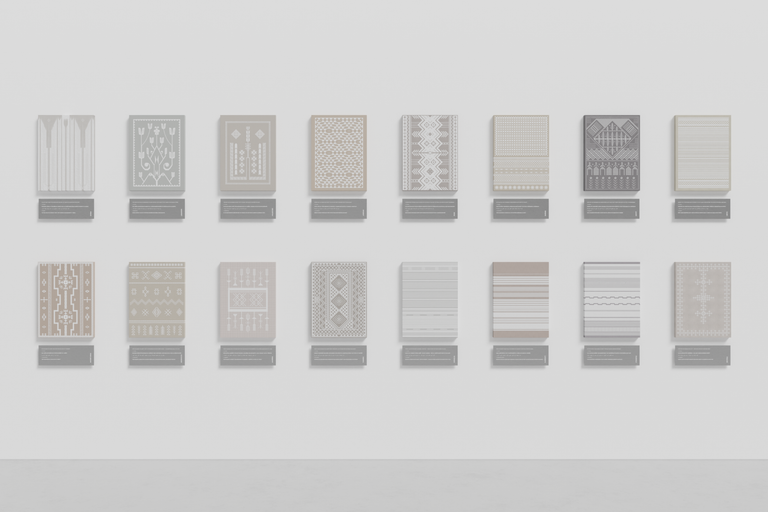
“Obscured Identities” deconstructs this classification by highlighting the nuances between artistic traditions and vernacular languages, bringing forward identities often suppressed by a generic categorization. Through a series of 16 pictorial and sculptural works, Rad challenges the hegemony of a term that diminishes autonomous cultural distinctions.
Each piece consists of two cultural elements:
Textile canvas: Each piece illustrates a traditional motif specific to its country, interpreted by Rad, rendered in white, and segmented geometrically to highlight its uniqueness. This monochrome choice facilitates comparison, showcasing the formal richness of these artistic heritages and asserting each territory’s individuality against dominant narratives.
Metal plate engraving: Featuring a phrase in the country’s vernacular language, accompanied by translations in English and Arabic. This element symbolizes the recognition of the local language and challenges the imposed label on these peoples. The work becomes comparative archaeology. A wall of difference. A defiance of uniformity. A visual argument against flattening.
The installation is immersive and comparative, encouraging viewers to deconstruct oppressive structures and question the transmission of knowledge and resistance to cultural homogenization. These works serve as visual and linguistic documents, documenting cultures suppressed by an inappropriate classification. The mural arrangement forms an alternative cultural cartography, where each fragment engages in comparative dialogue, unveiling the nuances and divergences between territories too often grouped under the same label.
A Call for the Recognition of Singularities
Far from being mere denunciation, “Obscured Identities” creates a space where art becomes a tool of cultural resistance against standardizing ideologies that obscure historical and cultural complexities. Through its dialogue between past and present, the project affirms marginalized identities and documents vernacular languages and local cultural traditions as living evidence of distinct heritages, highlighting the multiplicity and individuality of each culture.
Equal treatment requires that these identities be named with the same specificity as others: Shami (Levantine), Iraqi, Maghrébin, Egyptian, Northeastern African—rather than being collapsed into a single nationalist label or colonial term. If Arab nationalism or earlier Greek-based imperial political agendas were once promoted as unifying projects, continuing to use their terminology today perpetuates an ideology that enforces homogeneity, reduces multiplicity to uniformity, and creates exclusionary frameworks.
Beyond terms and classifications, it is individual expression and cultural production that preserve history and identity. This project celebrates the richness, nuance, and autonomy of peoples grouped under a single politically imposed label, offering a platform where each culture exists in their own right. Through its visual and linguistic documents, the work presents these identities as tangible evidence of their distinct heritage, resisting homogenization and confronting reductive narratives.
They are memory systems.
They are architecture.
They are sound and fiber and voice.
How can we recognize linguistic and cultural diversity independently of political, religious, colonial, or imperial systems of control?
How can we affirm and honor each culture’s unique heritage while resisting homogenization imposed by external or nationalist frameworks?
How can we ensure recognition of local diversity without erasing historical identities, such as the Shami (Levantine) populations long recognized as Syrians?
Why do some populations face criticism when asserting local identities, while others do not?
How can we ensure that recognition of living languages and cultures is not dictated by historical bias or power?
© RAD HOURANI
All rights reserved. No part of any information, images, or artwork located within this site may be reproduced, stored, or transmitted without the permission of the copyright owner.
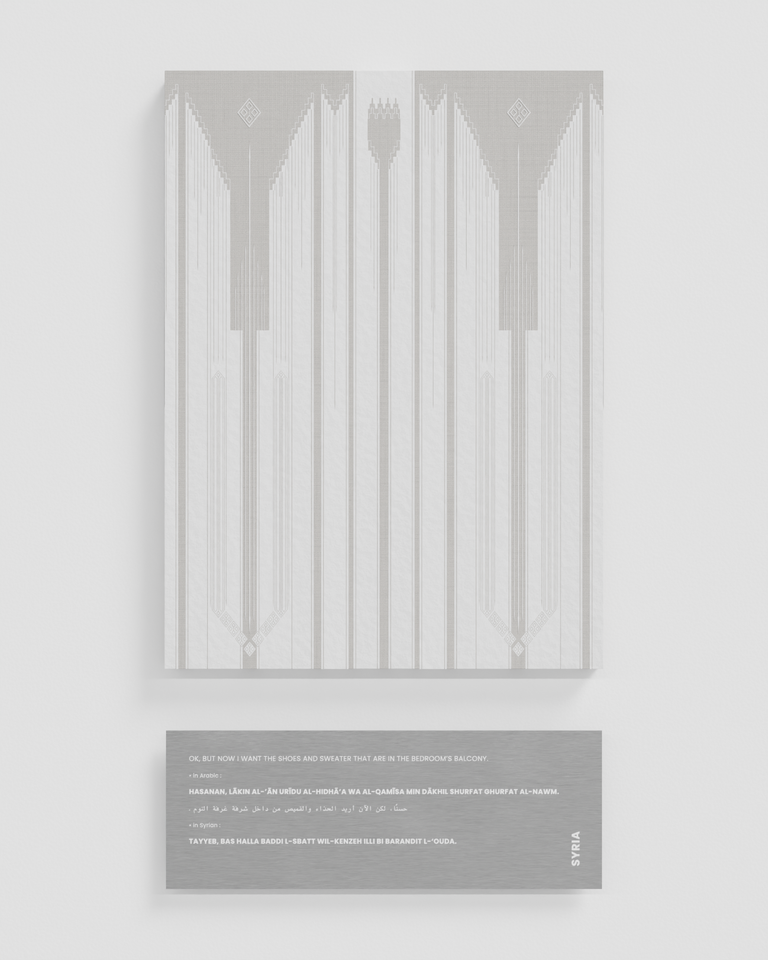
SYRIA – 2024
3D Giclée on FineArt canvas, 55.88 x 76.2 x 3.8 cm (22” x 30” x 1.5”). UV print on Dibond with brushed aluminum finish, 55.88 x 20.3 cm (22” x 8”).
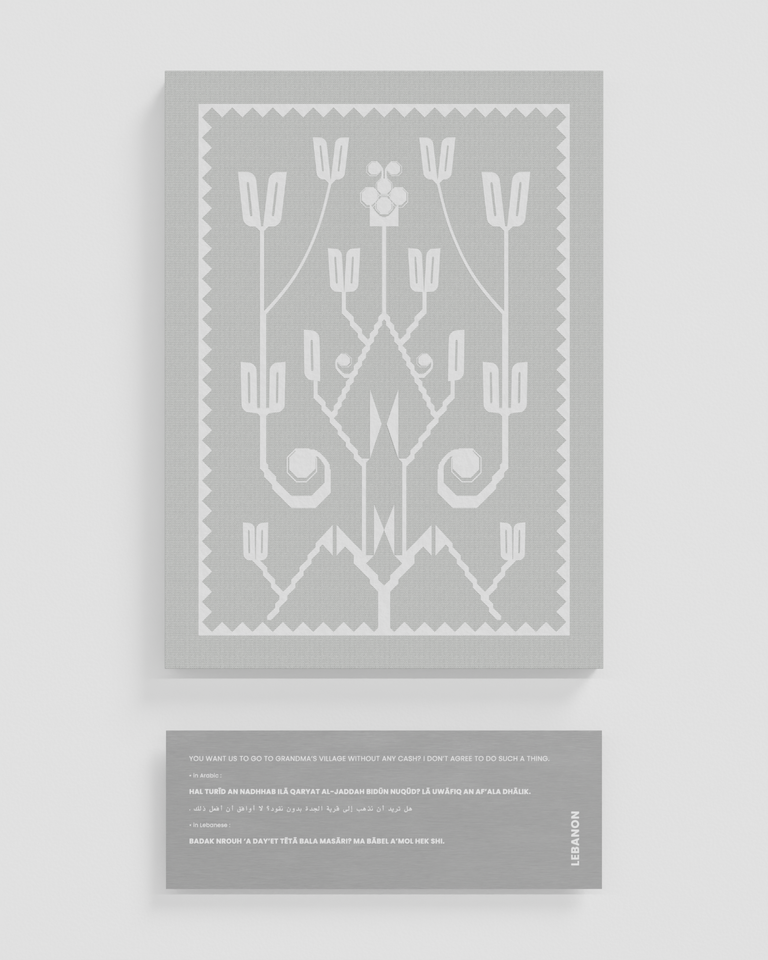
LEBANON – 2024
3D Giclée on FineArt canvas, 55.88 x 76.2 x 3.8 cm (22” x 30” x 1.5”). UV print on Dibond with brushed aluminum finish, 55.88 x 20.3 cm (22” x 8”).
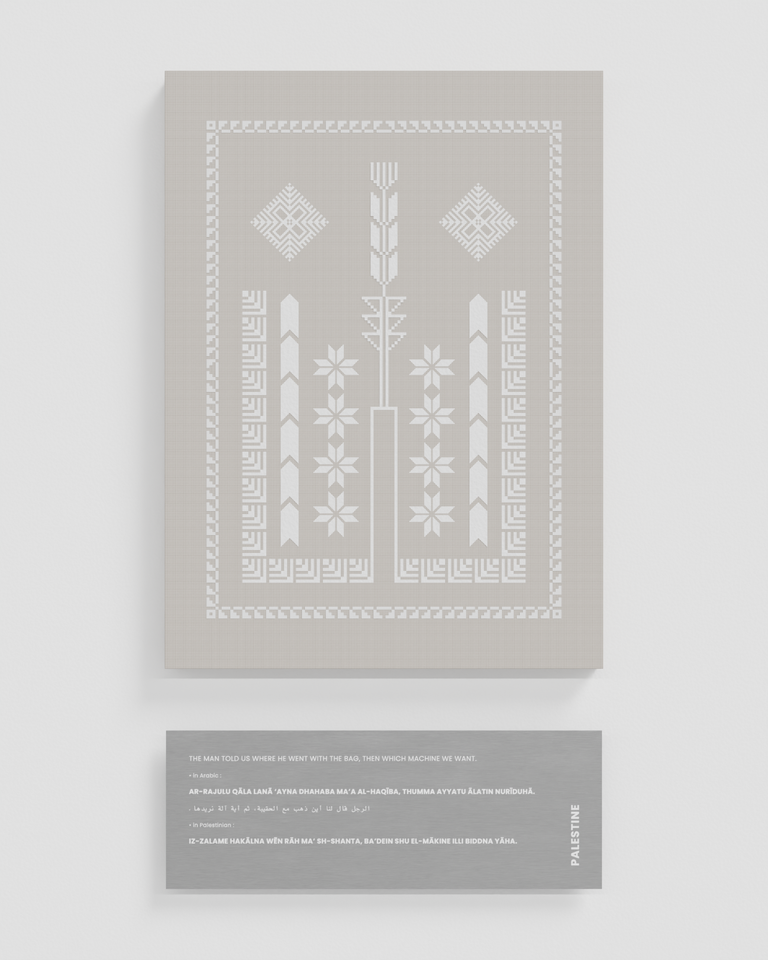
PALESTINE – 2024
3D Giclée on FineArt canvas, 55.88 x 76.2 x 3.8 cm (22” x 30” x 1.5”). UV print on Dibond with brushed aluminum finish, 55.88 x 20.3 cm (22” x 8”).
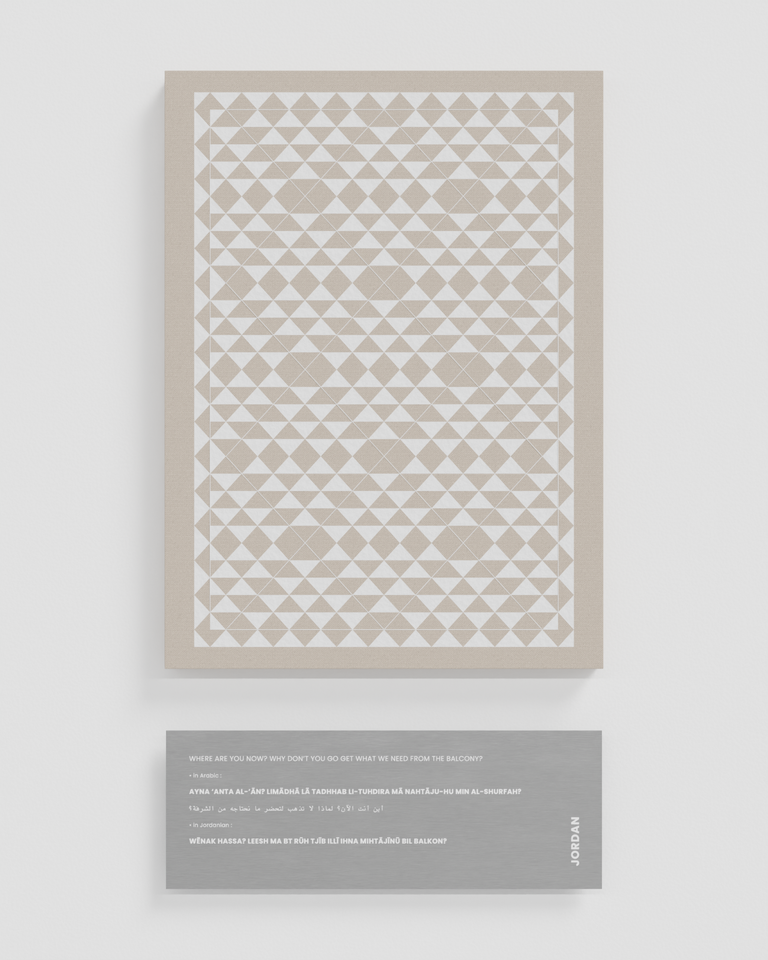
JORDAN – 2024
3D Giclée on FineArt canvas, 55.88 x 76.2 x 3.8 cm (22” x 30” x 1.5”). UV print on Dibond with brushed aluminum finish, 55.88 x 20.3 cm (22” x 8”).
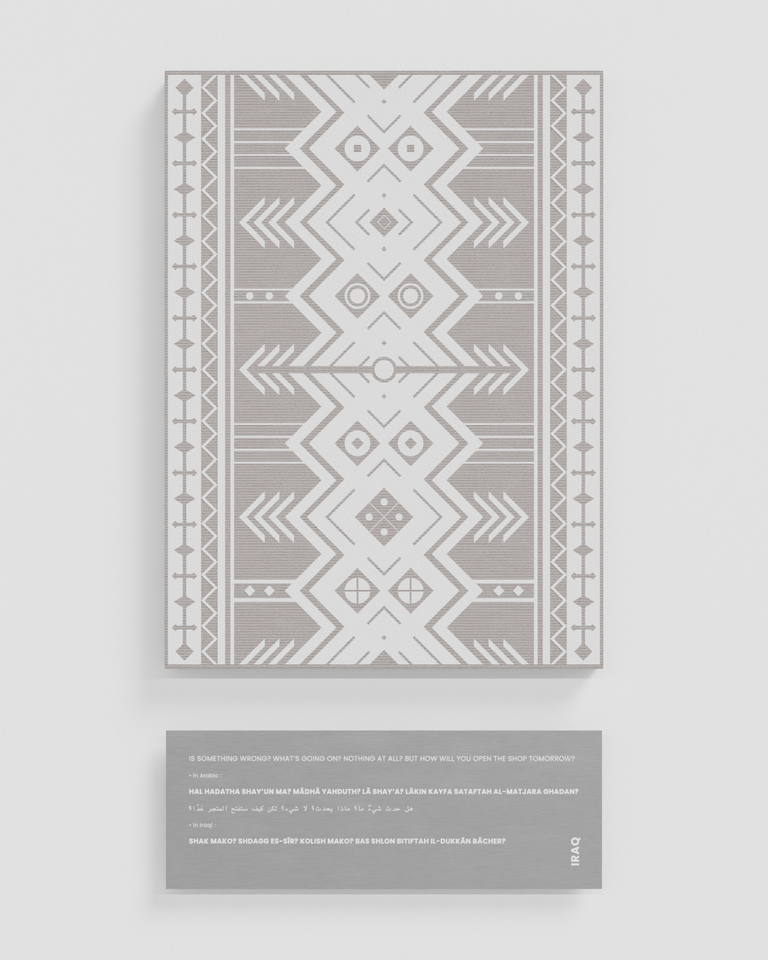
IRAQ – 2024
3D Giclée on FineArt canvas, 55.88 x 76.2 x 3.8 cm (22” x 30” x 1.5”). UV print on Dibond with brushed aluminum finish, 55.88 x 20.3 cm (22” x 8”).
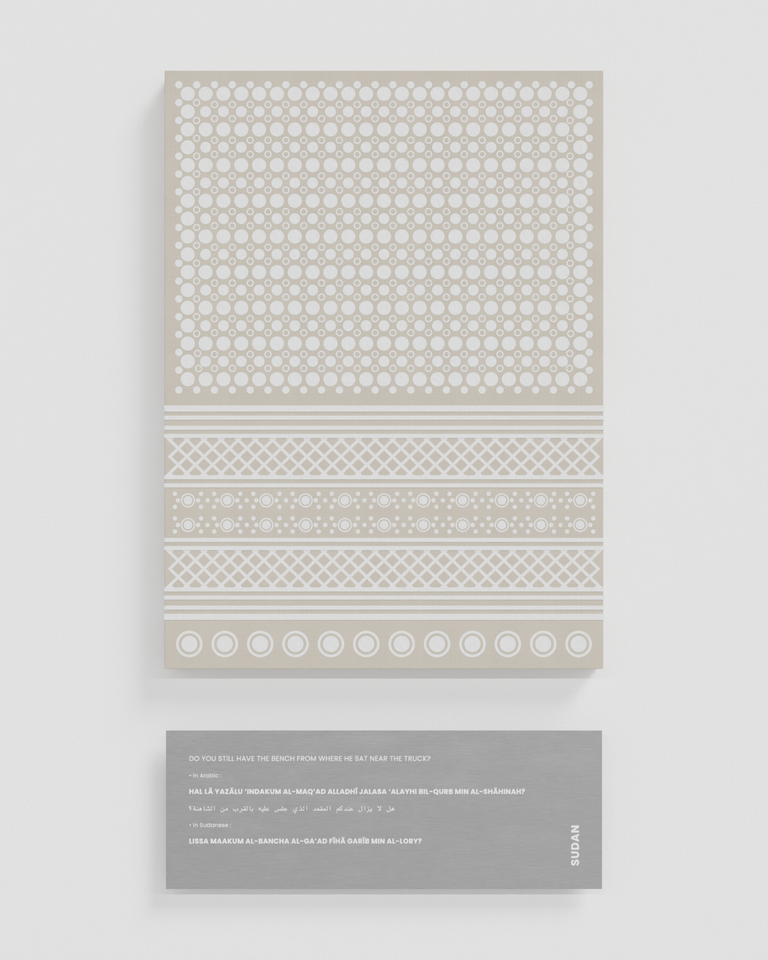
SUDAN – 2024
3D Giclée on FineArt canvas, 55.88 x 76.2 x 3.8 cm (22” x 30” x 1.5”). UV print on Dibond with brushed aluminum finish, 55.88 x 20.3 cm (22” x 8”).
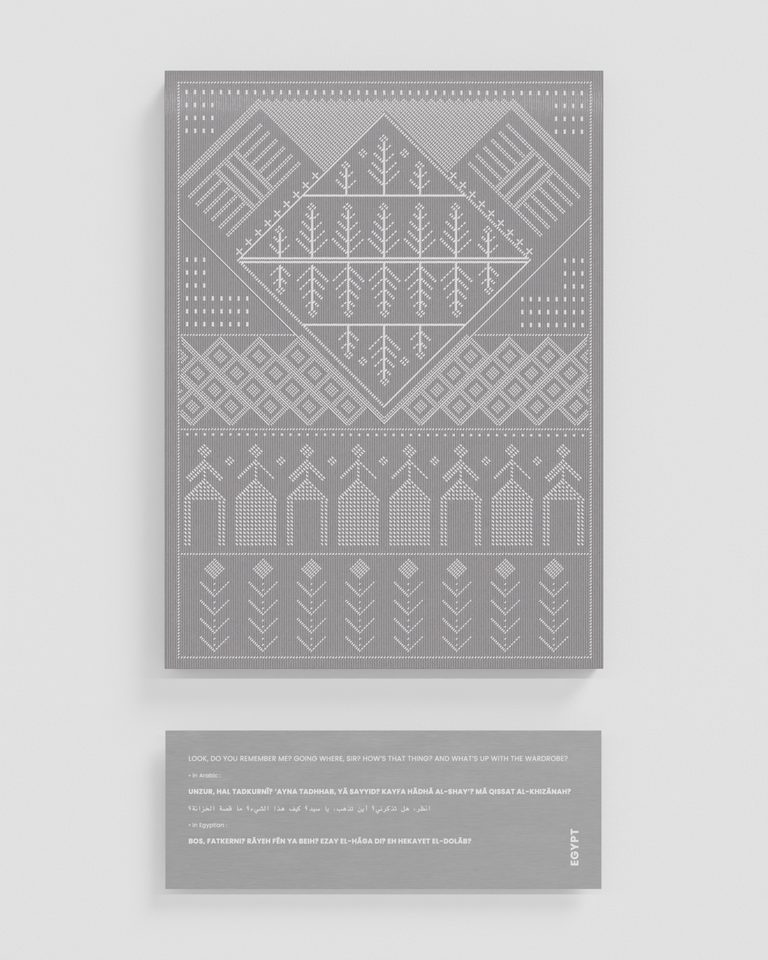
EGYPT – 2024
3D Giclée on FineArt canvas, 55.88 x 76.2 x 3.8 cm (22” x 30” x 1.5”). UV print on Dibond with brushed aluminum finish, 55.88 x 20.3 cm (22” x 8”).
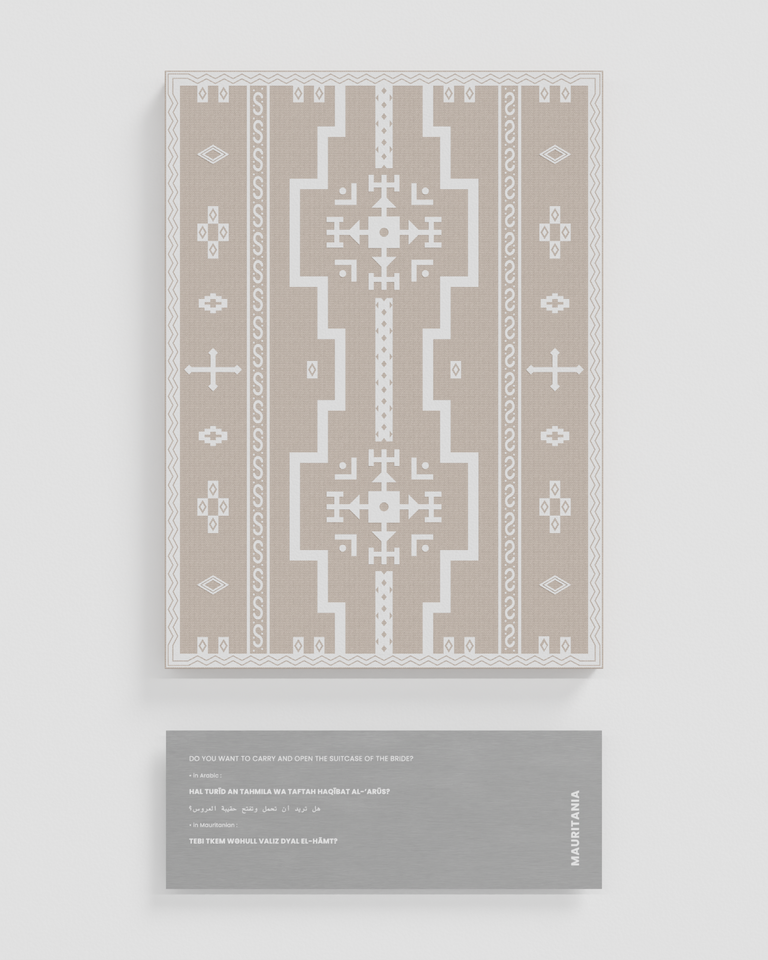
MAURITANIA – 2024
3D Giclée on FineArt canvas, 55.88 x 76.2 x 3.8 cm (22” x 30” x 1.5”). UV print on Dibond with brushed aluminum finish, 55.88 x 20.3 cm (22” x 8”).
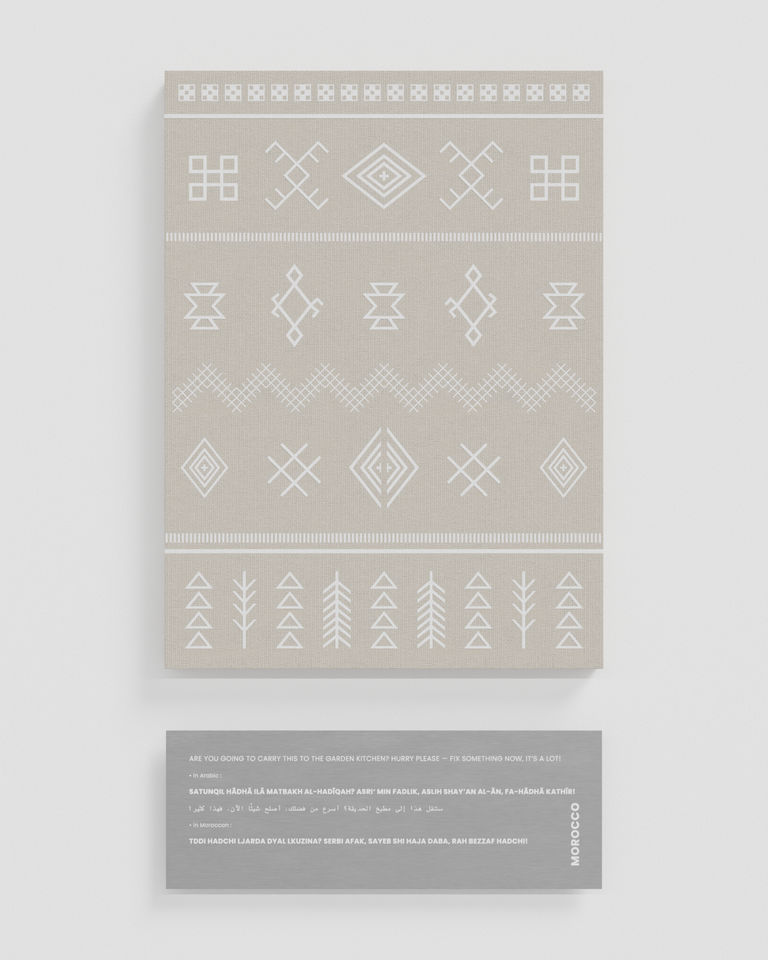
MOROCCO – 2024
3D Giclée on FineArt canvas, 55.88 x 76.2 x 3.8 cm (22” x 30” x 1.5”). UV print on Dibond with brushed aluminum finish, 55.88 x 20.3 cm (22” x 8”).